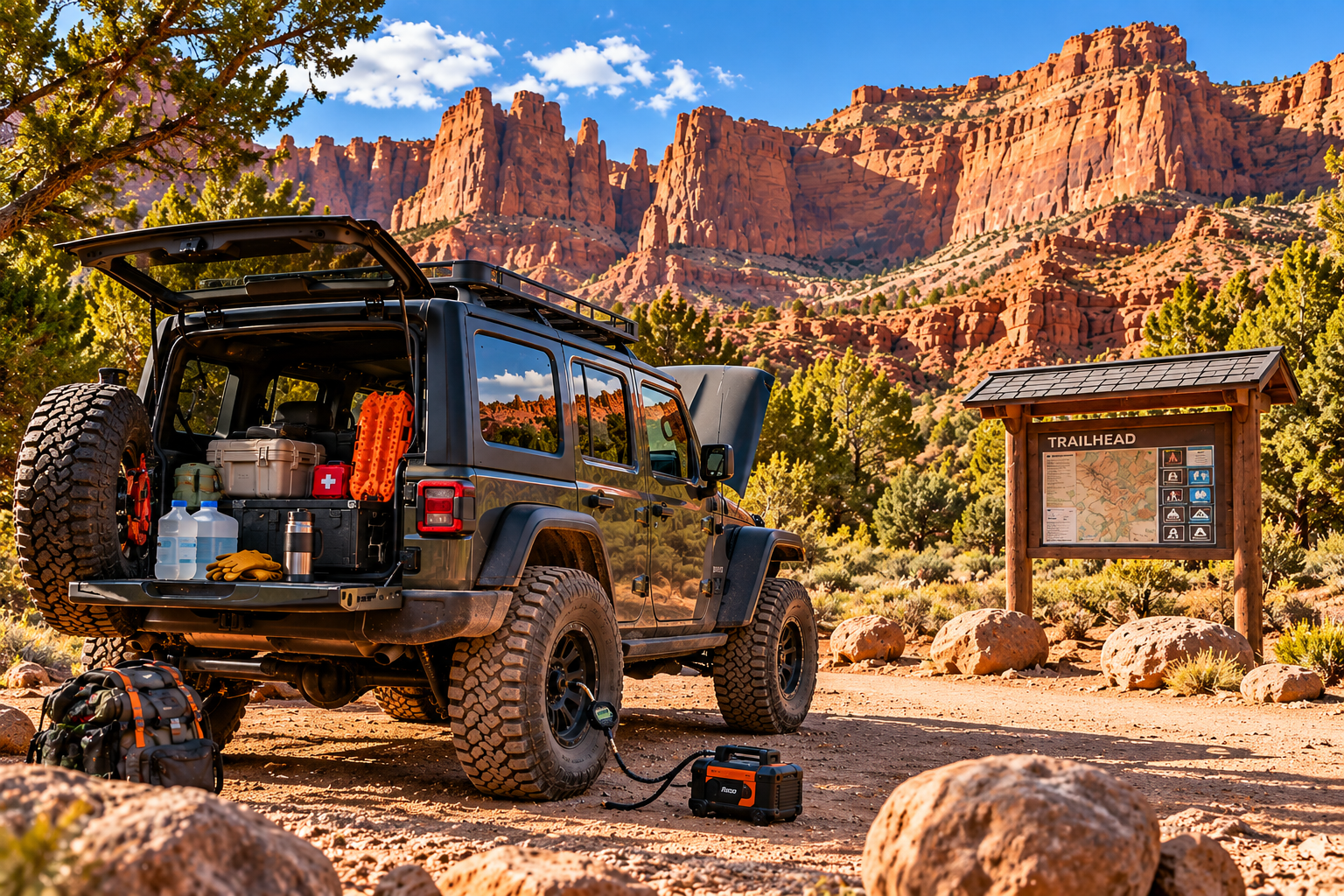
Jeep at a trailhead with recovery gear, water and an air compressor ready
Before You Go

Vehicle Prep Checklist

Tires, fluids, recovery points and gear to check before you roll out of town.

Most bad days on the trail start in the parking lot. A 20-minute check before you leave can save you a tow bill and a long walk.

Tires and wheels

  • Check tread and sidewalls for cuts, bulges and plugs.
  • Carry a full-size spare, a jack that works off-road, a lug wrench and a tire plug kit.
  • Air down at the trailhead for traction and a smoother ride. Many drivers run 15 to 20 psi on slickrock, but follow your tire and wheel maker's guidance.
  • Bring a compressor so you can air back up before the highway.

Under the hood

  • Top off oil, coolant, brake fluid and power steering fluid.
  • Look for leaks, cracked hoses and loose belts.
  • Check that the battery terminals are clean and tight.

Underneath

  • Check steering parts, U-joints and CV boots for play or tears.
  • Make sure skid plates and rock sliders are tight.
  • Confirm you have rated recovery points front and rear. Tie-down loops and tow balls are not recovery points.

In the rig

  • Full tank of fuel. Stations are in town, not on the trail.
  • At least a gallon of water per person per day, plus extra.
  • First aid kit, fire extinguisher, basic tools, gloves and a headlamp.
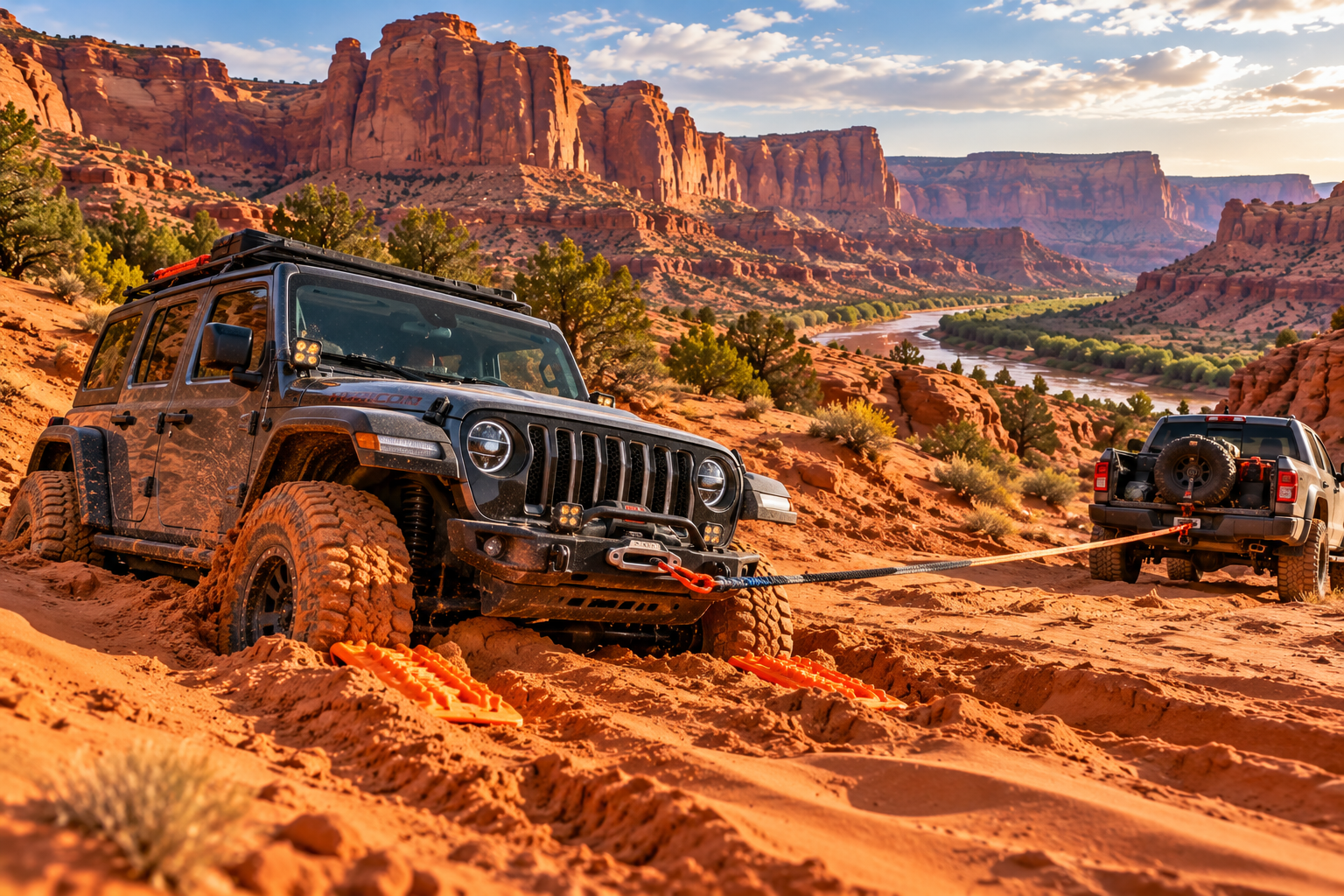
  • Recovery gear: kinetic rope or strap, soft shackles and traction boards.
  • Strap everything down. Loose gear becomes dangerous on steep climbs.
Rig Life Partner Tip

Moab is a bad place to find out your tires or axles are tired. Get a pre-trip check, new tires or a quick fix from a local shop before you hit the trail.