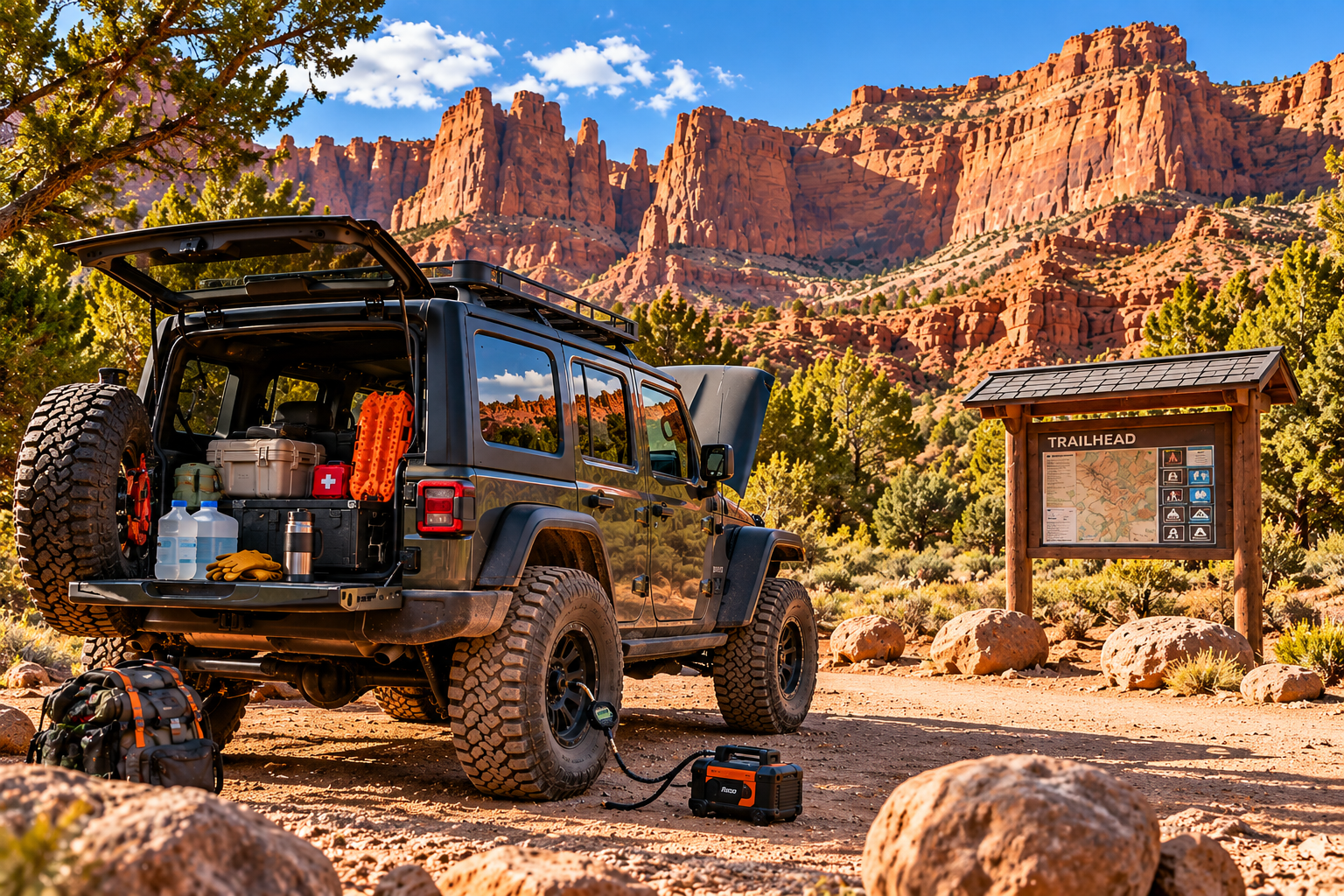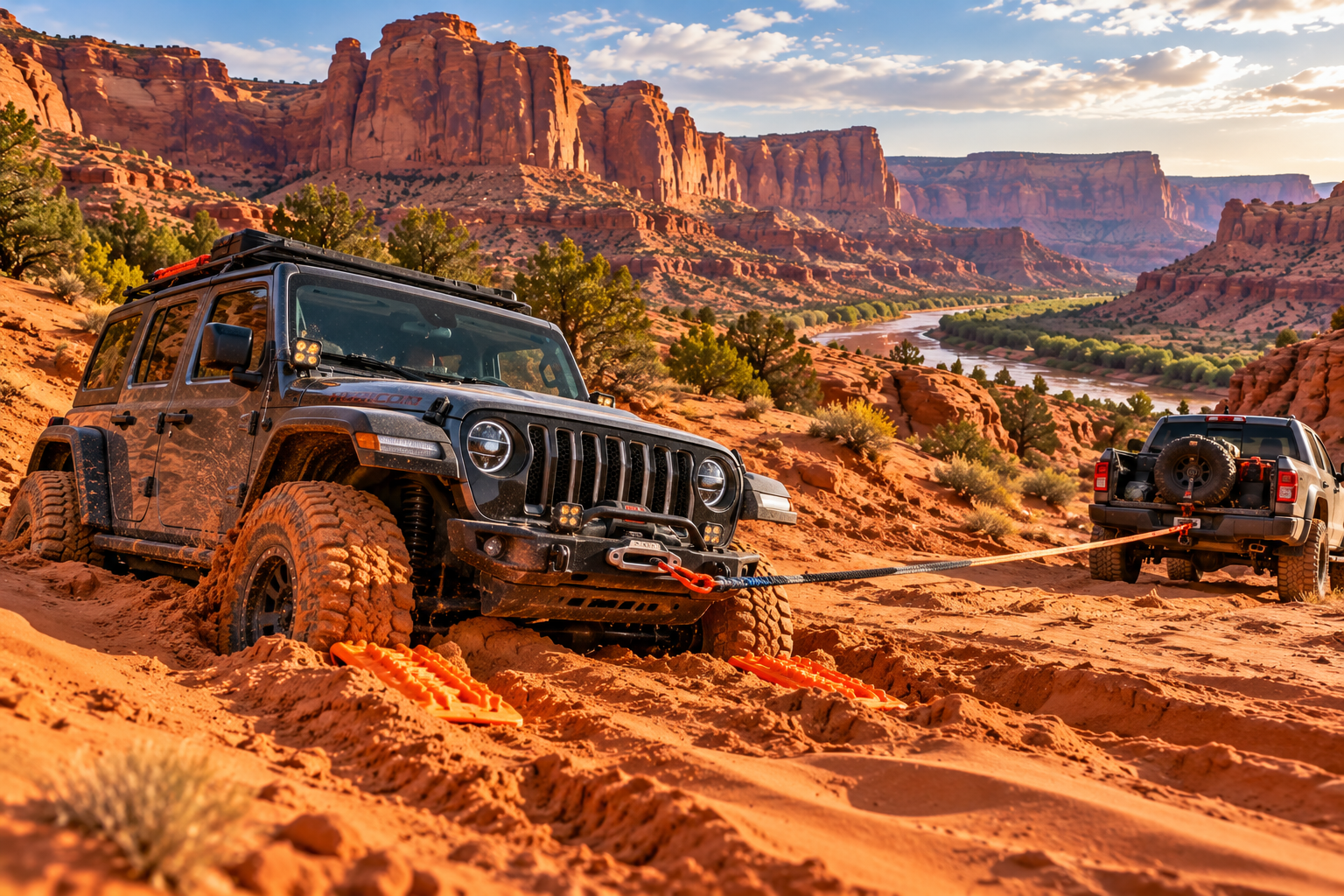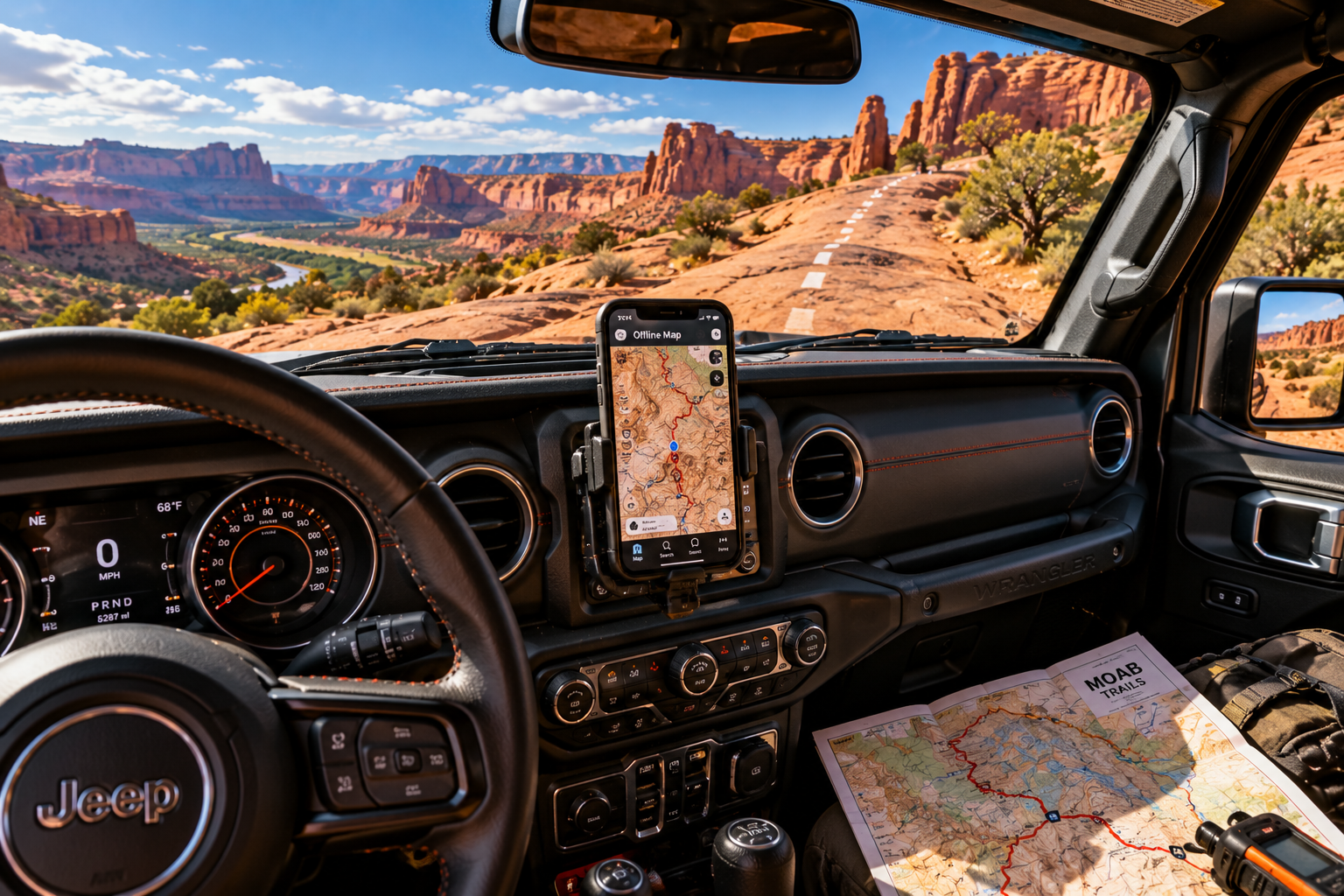
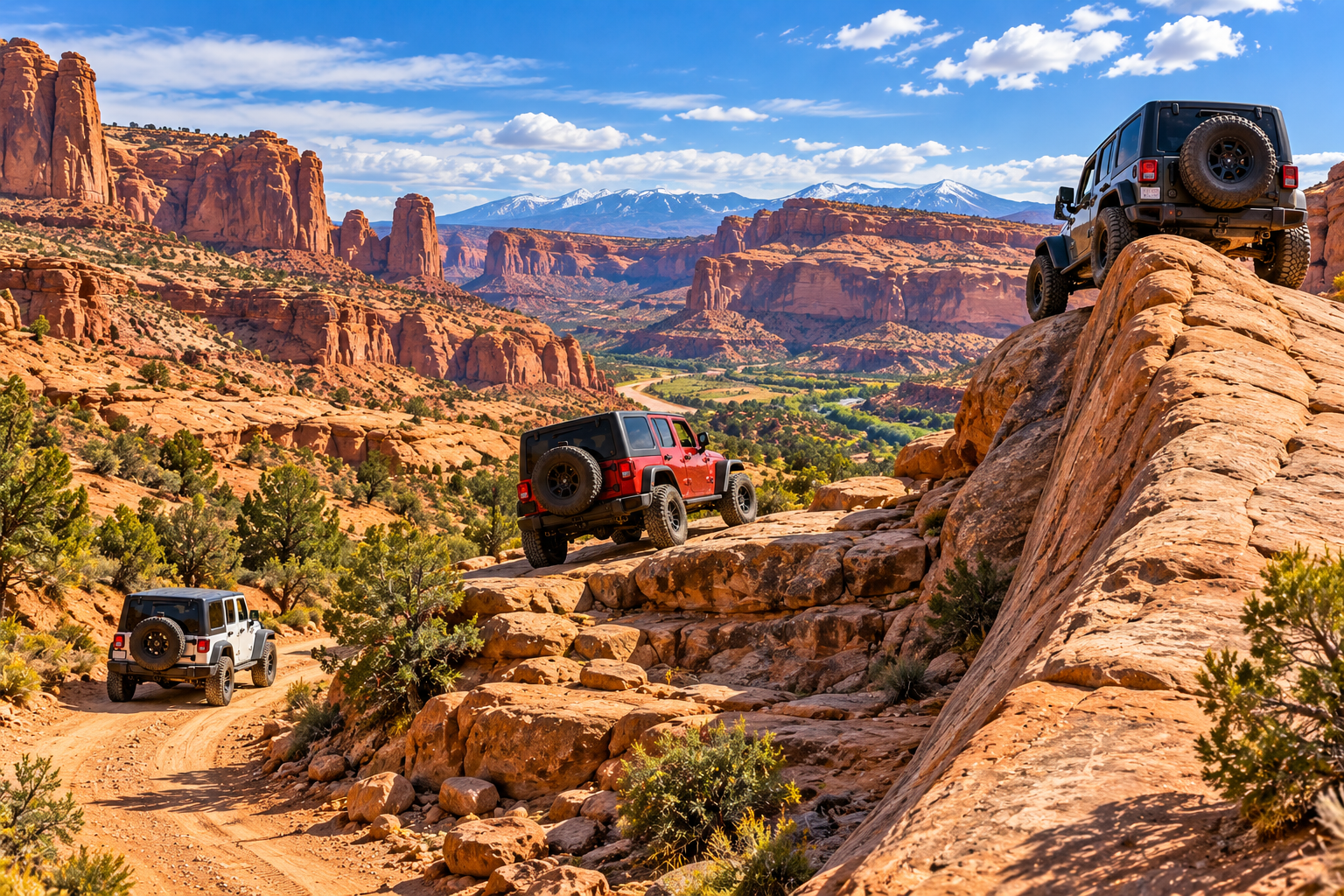
A trail rating is a quick way to answer one question: can my vehicle and I get through this safely? Guidebooks, apps and local clubs each use their own scale, so always check whose rating you're reading. Most follow the same basic idea.
Graded dirt or gravel roads, some washboard and mild ruts. A stock high-clearance SUV or truck can usually handle it in dry weather. Great for a first day, scenic drives and families.
Rocky sections, short ledges, sand and steeper climbs. You'll want 4WD with low range, good all-terrain tires and decent ground clearance. Expect to pick a line and use a spotter now and then.
Big ledges, steep slickrock, tight off-camber turns and real chances of body damage. Built rigs with lifts, lockers, armor and 33-inch or larger tires are the norm. Experience, a spotter and a second vehicle are strongly recommended.
Obstacles that can roll or break a vehicle. Heavily modified rigs, skilled drivers and a group that knows recovery. Many trails have optional extreme obstacles with an easier bypass, so look for the bypass before you commit.
New to Moab or not sure your rig is ready for a harder trail? Run it with a local guide first, or rent a Jeep that's already built for it.